Years on a coin cell, or self-powered.
Rare events should not require a processor and volatile memory to remain active around the clock.
Spiketronix designs ultra-low-power neuromorphic AI chips, and the software to run them, built on non-volatile compute-in-memory.
Rare events should not require a processor and volatile memory to remain active around the clock.
Local inference removes network delay and reacts while the signal still matters.
Continuous local sensing keeps critical data private and surfaces early warning patterns.
Each pillar removes a different source of wasted energy. Together, they make always-on intelligence practical.
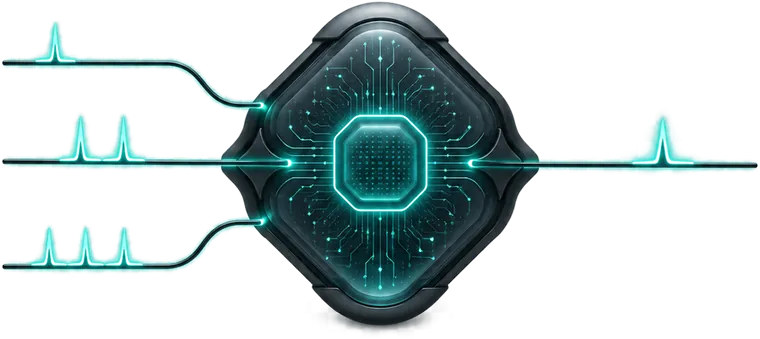
Sleeps until something changes.
Spiking neurons stay silent until their input changes, then emit a brief spike — no event, no computation, no energy. Time and sequence are built in, so vibration, sound and biosignals are computed the way the brain does.
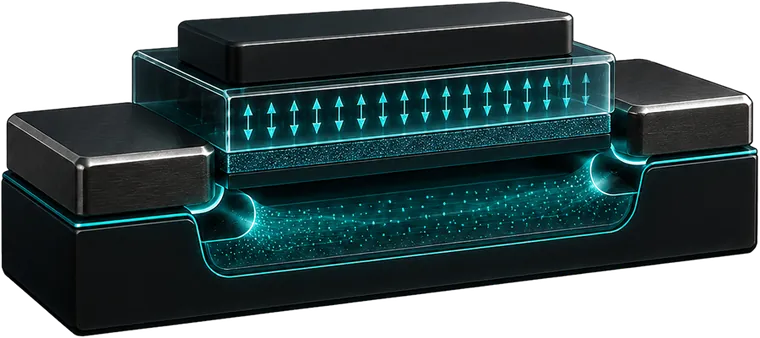
Remembers the model with power removed.
Once compute is sparse, the real cost is remembering the model through the long gaps between events. FeRAM holds every weight with the power fully off — so the gaps cost nothing, and the chip is instant-on.
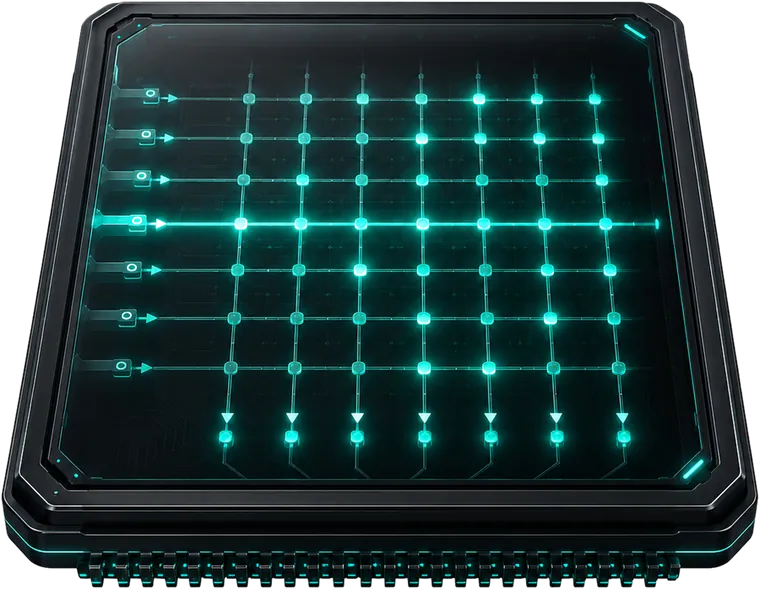
Computes where the weights are stored.
A conventional chip shuttles weights to a separate compute unit every operation — and moving data wastes time and energy. Compute-in-memory does the maths where the weights already live, so nothing moves.
The platform isn't a bare accelerator block you're left to wire up. Silicon, model and toolchain are co-designed as one system, so it ships as a finished part you can build a product around.
The neuromorphic compute engine and memory system integrated as one chip platform.
Designed to connect with conventional embedded systems and host controllers.
Device variation is handled inside the platform rather than pushed onto the customer.
A deployable architecture rather than a custom research demonstrator.
 Neuromorphic SoC
Ultra-low-power edge AI
Neuromorphic SoC
Ultra-low-power edge AI
Models are trained around the actual memory, quantization and compute behaviour.
Standardized configuration and control instead of custom laboratory scripts.
Moves a trained network into a configured, deployable hardware implementation.
The deployed model can be calibrated to the device and its operating environment.

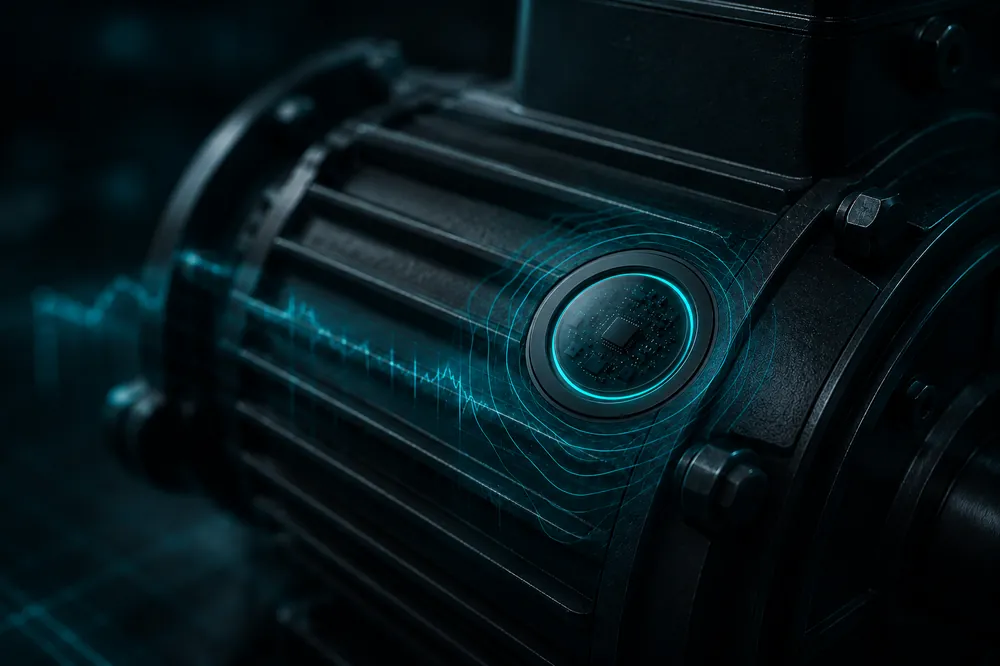
Industrial equipment often shows subtle changes long before a visible fault or breakdown occurs.
Spiketronix learns the normal behaviour of a machine directly on the device, detects deviations early and triggers an alert — without continuously sending raw sensor data to the cloud.
The same ultra-low-power architecture can be applied wherever continuous local sensing and immediate decisions are required.
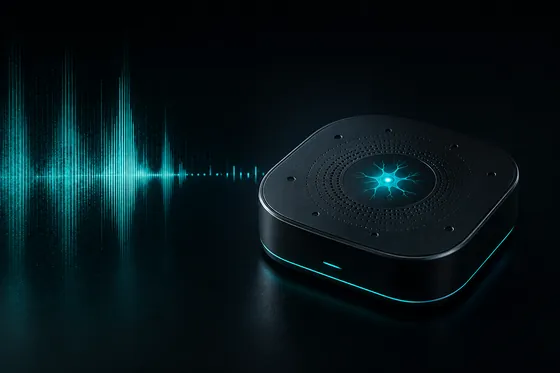
Recognise spoken commands and wake-words on the device, without streaming audio to the cloud.

Identify changes in buildings, infrastructure and mechanical systems.

Recognize relevant physiological events without continuous data transmission.
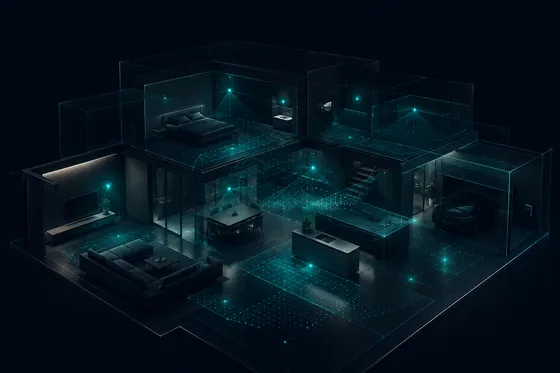
Detect changes in occupancy, activity and environmental conditions.
Capture vibration, sound or biosignals from the equipment in real conditions.
Train a hardware-aware model matched to the chip's memory and compute.
Write the trained weights into on-chip FeRAM — they hold with the power off.
Mount the programmed module onto the equipment; it runs standalone.
The chip watches continuously and flags the drift toward failure on-device.
Field data refines the model and reprograms the chip over its life.
Edge-AI hardware and system architecture; PhD from TUM.
CEO & System Architect
alptekin.vardar@spiketronix.aiTwo decades in deep-tech business development and funding.
CFO & Strategy
martin.landgraf@spiketronix.aiFerroelectric devices and neuromorphics; professor at TU Braunschweig and team lead at Fraunhofer IPMS.
Scientific Advisor
thomas.kaempfe@spiketronix.aiWe are happy to answer questions and provide more details about Spiketronix. Reach out for collaborations, partnerships or additional information.